脏节点(Dirty nodes)#
脏节点是指过去成功执行过的节点,但其输出现在被 n8n 认为是过时的或不可靠的。它们被标记为脏节点是为了表明,如果节点再次执行,输出可能会有所不同。它也可能是部分执行开始的节点。
🌐 A dirty node is a node that executed successfully in the past, but whose output n8n now considers stale or unreliable. They're labeled like this to indicate that if the node executes again, the output may be different. It may also be the point where a partial execution starts from.
如何识别脏节点数据(How to recognize dirty node data)#
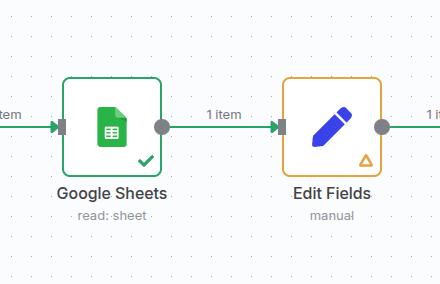
在工作流编辑器的画布中,你可以通过不同颜色的边框和原先绿色勾号位置的黄色三角来识别“脏”注意。例如:
🌐 In the canvas of the workflow editor, you can identify dirty notes by their different-colored border and a yellow triangle in place of the previous green tick symbol. For example:
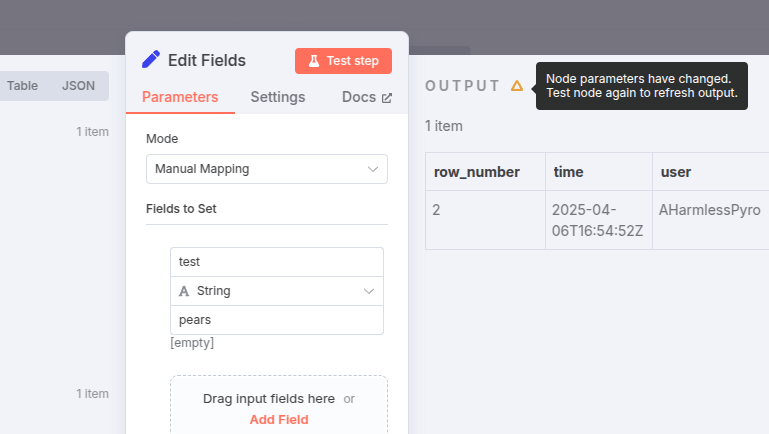
在节点编辑器视图中,输出面板上也会显示一个黄色三角形。如果将鼠标悬停在三角形上,会出现一个工具提示,提供有关 n8n 为什么认为数据过时的更多信息:
🌐 In the node editor view, the output panel also displays a yellow triangle on the output panel. If you hover over the triangle, a tooltip appears with more information about why n8n considers the data stale:
为什么 n8n 会将节点标记为脏节点(Why n8n marks nodes dirty)#
n8n 可能将执行数据标记为过时的原因有几种。例如:
🌐 There are several reasons why n8n might flag execution data as stale. For example:
- 插入或删除节点:将紧跟在插入节点之后的第一个节点标记为脏。
- 修改节点参数:将被修改的节点标记为脏。
- 添加连接器:将新连接器的目标节点标记为脏。
- 停用节点:将紧跟停用节点的第一个节点标记为脏节点。
??? 解释 “其他原因导致 n8n 标记节点为脏”
1 2 3 4 5 6 7 8 9 10 11 | |
-
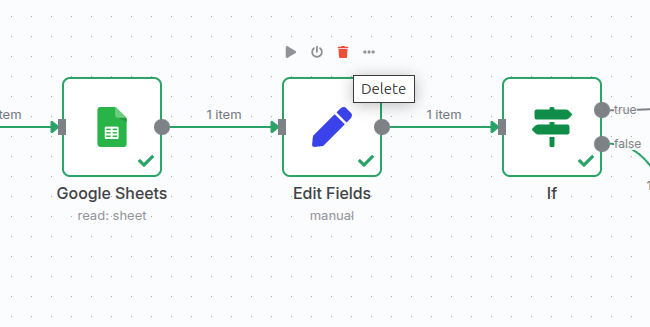
在删除工作流中的已连接节点时:
-
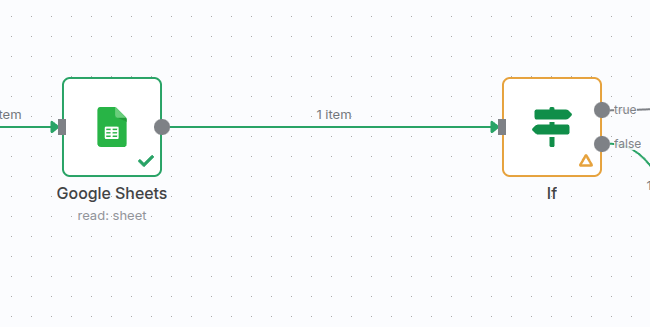
序列中的下一个节点变脏:
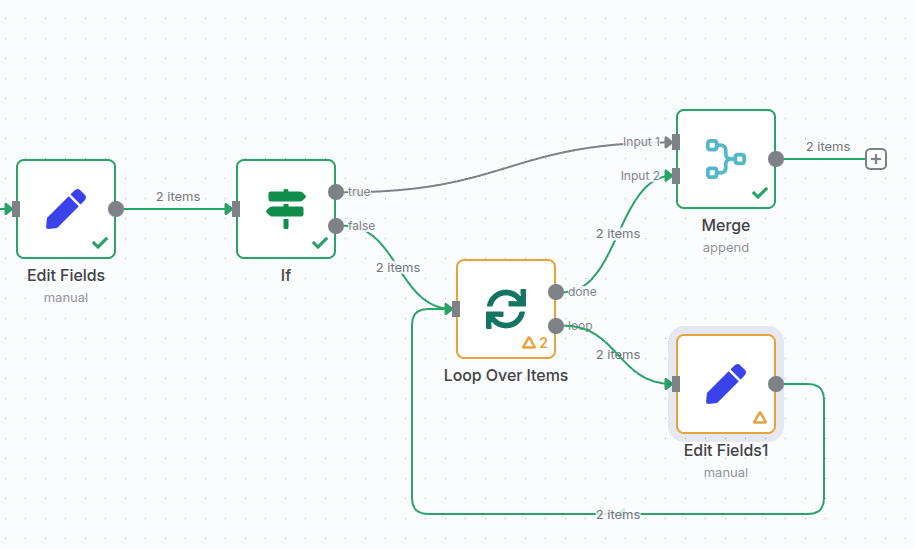
在使用循环(使用 Loop over Items 节点)时,如果循环中的任何节点是脏的,循环的初始节点也会被视为脏的:
🌐 When using loops (with the Loop over Items node), when any node within the loop is dirty, the initial node of the loop is also considered dirty:
解析脏节点(Resolving dirty nodes)#
再次执行节点会清除其脏状态。你可以通过触发整个工作流手动执行,或者在单个节点或其后任意节点上使用 执行步骤 运行 部分执行。
🌐 Executing a node again clears its dirty status. You can do this manually by triggering the whole workflow, or by running a partial execution with Execute step on the individual node or any node which follows it.